


| Size | Chest circumference | Arm length | Back length |
|---|---|---|---|
| S | 105 | 62 | 85 |
| M | 113 | 64 | 85 |
| L | 121 | 66 | 85 |
| XL | 129 | 66 | 85 |
| XXL | 137 | 66 | 85 |
| XXXL | 145 | 66 | 85 |


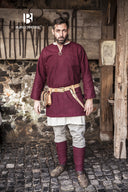


The tunic is an essential, gender-neutral piece of clothing spanning fashion from Antiquity to modern times. Its design and meaning shifted often throughout history.
In some eras, tunic length indicated the social status of the wearer. In Ancient Rome, people wore the tunic loosely and simply, with a basic design. The Vikings and Germanic peoples wore theirs closer to the body, layering an undertunic, long sleeves, trousers, and leg wrappings to guard against the cold.
Tunics like this were worn throughout the medieval period.
Fabric material: 74% wool, 15% polyester, 7% polyamide, 4% other natural fibers.


