


Recommended combination


Product description
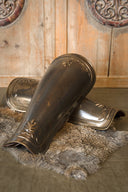
Similar greaves date back to as early as the 4th century BC. Roman generals and emperors continued using them as ceremonial equipment until the 2nd century AD. From the 4th to the 1st century BC, Roman soldiers such as the Principes, Hastati, and Triarii wore greaves in battle. Often, they wore just one greave — on the leg at the front of the formation — to cut costs.
Starting in the first half of the 16th century, the subarmalis and other classical armor pieces came back into fashion. The Renaissance brought renewed interest in classical antiquity, sparking a new direction in plate armor known as the all'antica style. This style defines the cinquedea, barbute, and armor with decorative curves. Murals and paintings from the period regularly show Italian knights in classical greaves, subarmalis, and breastplates.
Product details
Product details:
Material: steel with antique brass finish
Length: 39.4 cm
Set of 2 pieces
Based on a historic original
Shipment weight (grams): 3000


