


Recommended combination


Product description
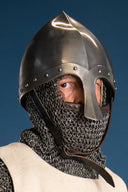
In the early 12th century, several variations of the popular nasal helmet emerged across Europe. Phrygian nasal helmets get their name from their resemblance to the Phrygian cap. This was no regional trend — armies throughout Europe used it. Its distinctive shape likely reflects a thickening of the steel at the front, where blows were most likely to land and protection mattered most.
This helmet style stayed popular through the end of the 12th century. By the 13th century, infantry wore it most. Medieval manuscripts consistently show nasal helmets like this paired with an aventail.
A great choice for medieval reenactment, reenactment battles, and Historical European Martial Arts (HEMA).
Product details
Product details:
Max. head circumference: 61 cm
Material: Carbon steel
Thickness: 2 mm
Inlay: equipped with helmet inlay
Based on a historic original
Shipment weight (grams): 3000


