


| Size | Chest circumference | Armhole depth | Back length |
|---|---|---|---|
| S | 105 | 30.5 | 122 |
| M | 113 | 32 | 122 |
| L | 121 | 33.5 | 122 |
| XL | 129 | 35 | 122 |
| XXL | 137 | 36 | 122 |
| XXXL | 145 | 37.5 | 122 |
Product description
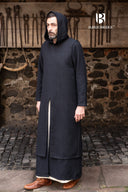
The surcot was a sleeveless surcoat that was worn over other clothing or armor during the High and Late Middle Ages. In contrast to the open tabard or cyclas, the sides of the surcot are closed, giving the garment more of a long, sleeveless shape. tunic.
From the twelfth and thirteenth centuries, such surcoats increasingly became part of the equipment of knights. They were initially mainly about one chainmail shirt worn and later also in combination with doublets and plate armor. During the Crusades, surcoats are often depicted as part of the knightly equipment. From the thirteenth century, colours, coats of arms and other heraldic symbols could be applied to the surcoat, making the identity and origin of the wearer visible.
This surcot is made in a plain color colour without heraldry. This makes it a good one basic for your own historical equipment. For example, you can provide it with your own heraldry, a family coat of arms or the cross of a historical knighthood.
The loose fit is designed to allow the surcot to be worn over different layers, such as a... tunic, doublet, chainmail shirt or plate armor. This makes it suitable for reenactment, LARP and historically inspired knight equipment.
Product details
Product details:
Material: Devon Rough 100% cotton;
Colour: black;
Size: S t/m XXXL (see size chart below);
Shipment weight: 1 kg;
Care instructions: hand wash or hand wash cycle machine;
Based on historical original


