


Recommended combination

Product description
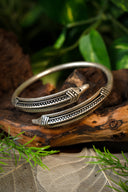
This bracelet was found in a Germanic female grave from the 3rd century CE in Himlingøje, Denmark.
The woman was between 40 and 50 years old when she died. She belonged to the local Germanic aristocracy. Although Denmark was never part of the Roman Empire, it was within its sphere of influence. Similar bracelets have been found in Näsby in Sweden and in Saaremaa in Estonia.
North Germanic tribes sent their warriors to fight as auxilia and foederati in Roman armies. There was lively trade between both regions. This resulted in a North Germanic culture that, alongside traditional Germanic objects, appreciated Roman luxury goods. In addition to two rings, this woman also wore two bracelets with stylized snake heads. Furthermore, she wore a fibula with 'widuhudaR' engraved on it in runes. In her mouth she had coins to pay the ferryman to the afterlife, according to Roman custom.
The snake was often depicted in Roman art and jewelry. It protected the family's prosperity.
In ancient Greece and the Bronze age, the snake symbolized healing. This snake veneration as seen in Roman culture possibly originated in Macedonia, where the snake was believed to be a fertility symbol. Therefore, women gladly wore jewelry in the form of a snake.
Product details
Product details:
Dimensions: 8 x 4 cm
Material: silvered bronze
Circumference: 20-24 cm
Shipping weight (grams): 50


