


Recommended combination

Product description
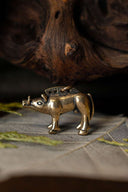
The Celts held the wild boar in high regard, admiring its courage and strength in battle. They created over 100 different figurines representing boars. The historical model for this Celtic boar pendant comes from a piece of the La Tène culture, found in the oppidum of Bibracte — the capital of the Gaulish Haedu tribe. Bibracte was the site of the Battle of Bibracte in 58 BC, where Julius Caesar and his Roman legions defeated the Celtic army led by Vercingetorix.
Fully sculpted and measuring 3 x 2 x 0.6 cm, the pendant can also stand on its own as a devotional object on an altar, representing Celtic reverence for the boar. Available in high-quality bronze.
The wild boar symbolized bravery in battle and was a revered hunting animal — reflected across Celtic statuettes, sword blades, and helmets. Its depiction evolved from wild, aggressive figures to more domesticated forms. Dating from the 3rd to the 1st centuries BC, these figurines show how central the boar was to Celtic culture. Their origins trace back to Etruscan art, where the aggressive posture and prominent dorsal ridge of the boar first appeared in the Bibracte-Luncani type.
Product details
Product details:
Material: bronze
Dimensions: 3 x 2 x 0.6 cm
Based on a historic original
Shipment weight (grams): 100


