


Recommended combination


Product description
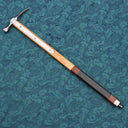
This type of war hammer is also called a cavalry hammer — it proved highly effective against armored mounted opponents. These weapons appeared in the second half of the 15th century and saw primary use in Italy, France, and Germany. The hammerhead featured a long spike similar to a miner's chisel, letting it pierce armor where a sword would fail. Variants like the Polish nadziak and the English cavalry hammer were popular among cavalry, including during the Hundred Years' War.
Its advantages were power and armor-piercing capability; the drawbacks were weight, unwieldiness, and the risk of the spike getting stuck. Even so, a single strike could crack open a helmet or breastplate and take an opponent out of the fight. The war hammer was a weapon of the elite — only mounted cavalry could afford one, using it to destroy sections of an opponent's armor from horseback. That made it primarily a close-combat weapon. By the 16th century, cavalry hammers had also become status symbols, decorated with patterns or monograms. The arrival of firearms steadily reduced their practical use. In Hungary they stayed in service a little longer, but by the 17th century the bayonet had replaced them entirely.
Built from wood with a leather grip, this war hammer is a great melee weapon for medieval collectors. Ideal for reenactment battles and late-medieval events.
Product details
Product details:
Material: 1065 carbon steel 48-52 HRC, leather, wood
Point: between semi-sharp and blunt. Easy to blunt yourself for use in reenactment
Length: 63.2 cm
Length hammer head: 16 cm
Balance point: 21 cm below the hammer blade
Weight: 742 g
Based on a historic original
Shipping weight (grams): 1000


