


Recommended combination


Product description
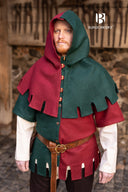
Discover the new Mi Parti collection from Burgschneider! The chaperon Dangereuse comes in two halves, sold separately. Mix and match them to build a mi parti hood in your preferred color combination. Fasten the left side to the right side with the buttons. If you belong to multiple medieval LARP and reenactment groups, a few left and right sides give you a wide range of color combinations to work with. The hood is a garment worn in medieval Europe between the 12th and 14th centuries. Farmers originally wore it for protection against cold and rain, but it later became a fashion piece that took on special shapes. The chaperon "Dangereuse" is made from a heavy wool fabric with a deep color, suitable for all weather conditions. From the 11th to the 16th century, the "mi-parti" (partially colored) style of dress was popular, joining two different-colored fabrics down the middle. The result is a color contrast that often creates a dramatic look. In the Middle Ages, mi-parti was an important style for cloaks, tabards, dresses, trousers, and gowns. The earliest examples date back to the 9th and 10th centuries, when split colors appeared on legs and shoes — boots were half one color, half another. Through the High Middle Ages, the mi-parti style grew in popularity as color symbolism in clothing became more important. Colors often indicated a particular status or allegiance. The style spread further in the 13th and 14th centuries, when many men — especially vassals — copied the coats of arms of their feudal lords. By the end of the 16th century, the style had gradually faded.
Product details
Product details:
Fabric material: 74% heavy wool, 15% polyester, 7% polyamide, 4% other natural fabrics.
Colour: red
One size fits all
This is a right half. Combine with a left half to make a full mi parti chaperon Dangereuse.
Washing instructions: wool cycle machine wash, cold
Based on a historic original
Shipment weight (grams): 1000


