


| Geschikt voor borstomtrek | Opening mouw | Borstomtrek | Lengte | |
|---|---|---|---|---|
| S | 99-101,5 | 70 | 103 | 59,5 |
| M | 104-106 | 80 | 112 | 65,5 |
| L | 116-118 | 83,5 | 124,5 | 70,5 |
| XL | 126-128 | 87 | 134,5 | 80 |


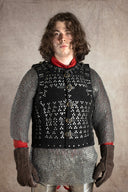


This brigandine is a replica of an original displayed in the Royal Armouries, Leeds.
Medieval brigandines were a refinement of the earlier coat of plates, which began to appear in the 13th century. These were typically simpler in construction, with larger metal plates. Early brigandines appeared towards the end of the 14th century and remained popular during the transition period between the chainmail shirt and plate armour. They were used throughout Europe in the 15th century and remained popular even into the 16th century.
A Brigandine was the most common form of protection among both common citizens and nobility. On the 15th century battlefield you'll find all different styles of brigandine, ranging from the most common brigandine of the archer to the most expensive and luxurious brigandine of the highest nobility! A versatile form of protection that offers excellent freedom of movement, a historical brigandine is characterized by clever construction.
A brigandine consisted of hundreds of small plates, attached beneath sturdy canvas or leather covering, which gave it its characteristic appearance, with all rows of plates elegantly visible on the outside. Not only did this give a very distinctive look, it was also particularly comfortable thanks to the excellent freedom of movement it offered. All these properties made prolonged wear possible.
Moreover, a brigandine offered excellent protection, with a perfect balance between virtually unrestricted movement and considerable defensive value. It was worn by knights and mounted warriors, often in combination with full plate protection for limbs and other parts of the body.


