
From the eight-legged Sleipnir to the Gallic goddess Epona: the horse holds a central place within Indo-European symbolism. Since its domestication around 4800 BCE, this animal radically transformed the human horizon. The horse became not only a means of transport, but a divine being that pulled the sun, represented kings, and guided souls to the afterlife.
Quick Facts: The Role of the Horse
Sun Symbol: The horse pulls the sun chariot across the celestial vault.
Kingship: Rituals with horses confirmed the sovereignty of rulers.
Fertility: Connected to agricultural gods such as Freyr and Demeter.
Death: Guide of the deceased; often given as an offering in aristocratic graves.
Deities: Epona (Celts), Poseidon (Greeks), Sleipnir (Old Norse).
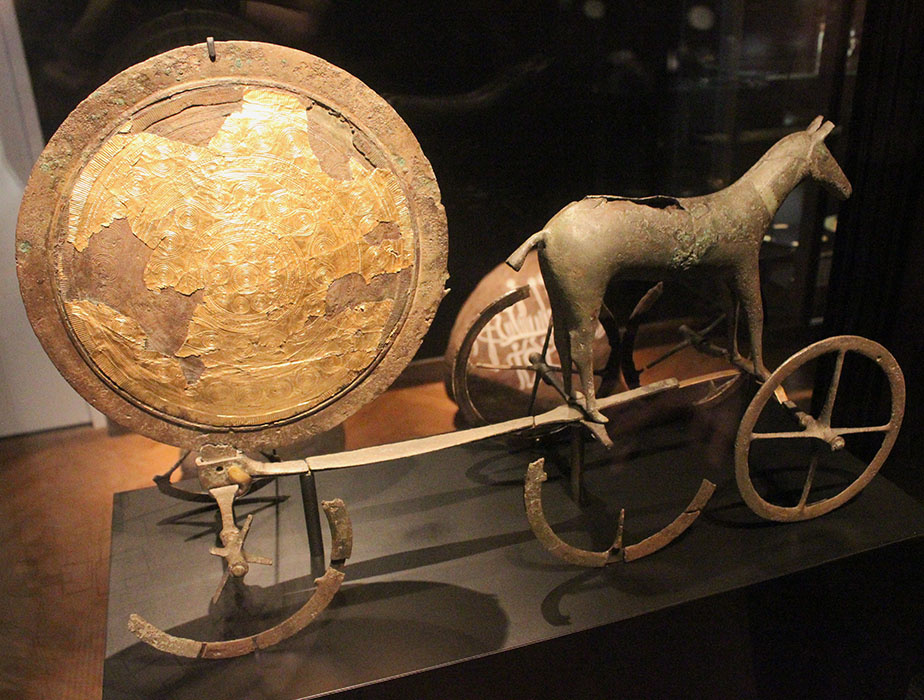
The Origin: The Steppe and the Sun Ritual
The Proto-Indo-Europeans on the Pontic steppes were the first to harness the revolutionary power of the horse. The animal offered mobility and became the center of religion. Royal rituals often revolved around sacrificing a white horse, the embodiment of the sun. This sacrifice connected the king to the fertility of the land and ensured a symbolic renewal of the cosmos.

The War Chariot as Status Symbol
With the invention of the wheel (ca. 3500 BCE), the chariot, drawn by horses, became a symbol for the sun traveling across the sky. In graves of the Sintashta culture and later among the Celts and Vikings, we see that leaders were buried with their chariots and horses to maintain their status in the afterlife.

Celtic Horse Worship: Epona and the White Mare
Among the Celts, the horse was inseparably connected to sovereignty.
Epona: The "Great Mare" was the protectress of horses and fertility. She was so popular that her worship even penetrated to the heart of the Roman Empire.
Rhiannon: In Welsh mythology, this supernatural figure rides on a radiant white horse that no one can catch.
The White Horse of Uffington: A gigantic geoglyph in the chalk hills of England, presumably a tribute to the sun that appears to pass along the horse during midwinter.

Roman and Greek Traditions
In the ancient world, the horse had both a military and a chthonic (underworld) significance.
Equus October (Rome): On October 15th, the right horse of a winning team was sacrificed to Mars. The tail was brought to the sacred hearth of Vesta to ensure fertility and military power.
Poseidon (Greece): Although we now know him as a sea god, Poseidon was originally the god of horses and earthquakes. Sailors sacrificed horses by drowning them in the sea for a safe voyage.
The Black Demeter: An Arcadian myth describes Demeter with a horse's head, symbolizing both fertility and mourning for death.

Germanic & Old Norse Horse Worship
For the Germanic peoples and Vikings, the horse was a sacred animal, with some (white horses) reserved exclusively for ritual purposes.
Sleipnir: Odin's eight-legged horse, capable of traveling between the worlds of the living and the dead (Hel). The eight legs are often linked to shamanistic traditions.
Freyr: The god of fertility was closely associated with horses. In his temples, sacred horses were kept and used for divination.
Hestavíg: Stallion fights were a popular pastime in Iceland, intended to select the strongest breeding stock and strengthen social bonds.

Sacrifices and Burials
High-status Vikings, such as those in the famous Oseberg Ship, were given horses in their graves. During the Yule festival, eating horse meat and sprinkling the hall with horse blood was an essential ritual for an aristocrat to affirm his claim to the land before his people.
FAQ: Frequently Asked Questions
Why did eating horse meat become taboo?
With the Christianization of Europe, eating horse meat was forbidden because it was closely associated with pagan sacrifices to Odin and Freyr. The church wanted to abolish these rituals, creating a taboo that still exists in many Western countries today.
What specifically does a white horse symbolize?
In almost all Indo-European cultures, the white horse symbolizes light, the dawn, and the sun. It is the animal of the gods and the rightful aristocrat.
Summary
Cosmic Power: The horse is the engine behind the sun and the seasons.
Sovereignty: The bond between king and horse was essential for a prosperous realm.
Supernatural: Horses like Sleipnir and Pegasus function as bridges to other dimensions.
Eternal Companion: Both in life and death, the horse remained the loyal companion of the warrior elite.
Honor the power and loyalty of the horse. Discover our collection of horse reliefs, jewelry with horse motifs, and replica coins celebrating the thousands-of-years-old bond between human and horse.


